In short
Why are more and more wild bees living in the city?
In half a minute: what is disappearing outside the city, what is being added in Amsterdam, and what RefuBees does about it.
100–300 m
That's how far a wild bee flies. What's in your street counts.
104
zones in Amsterdam, each with its own wild bee species.
45 → 100+
wild bee species in Amsterdam, from around 2000 to today.
Amsterdam as a blueprint
What works in Amsterdam can work in any city.
RefuBees began in Amsterdam and shows how a city can help wild bees. The approach is meant to be taken up elsewhere: there is already a totem in Leiden and in Raitenhaslach (Bavaria), and South Holland adopted the principle of spreading.
That is why this site is in Dutch. You will find English, German and French in a shorter version.
What we saw
Outside the city, insects are vanishing. In the city, more bees are turning up.
In protected nature reserves in Germany, the amount of flying insects fell by more than three quarters in 27 years. Over the same period, the number of wild bee species in Amsterdam grew. Fewer pesticides, less mowing and a mosaic of small spots made the city more liveable for some species than much of the countryside.
That does not make the city healthy yet. But it can help, if we design it wisely.
Read the full story →Nature reserves, Germany
−75%
flying insects, 1990–2017. Measured by weight.
Amsterdam
100+
wild bee species, previously ±45. Measured in species.
Two different measures, weight and number of species: not directly comparable, but the direction is. Sources: Hallmann et al. 2017; field survey of Amsterdam bees 1998–2015.
The totems
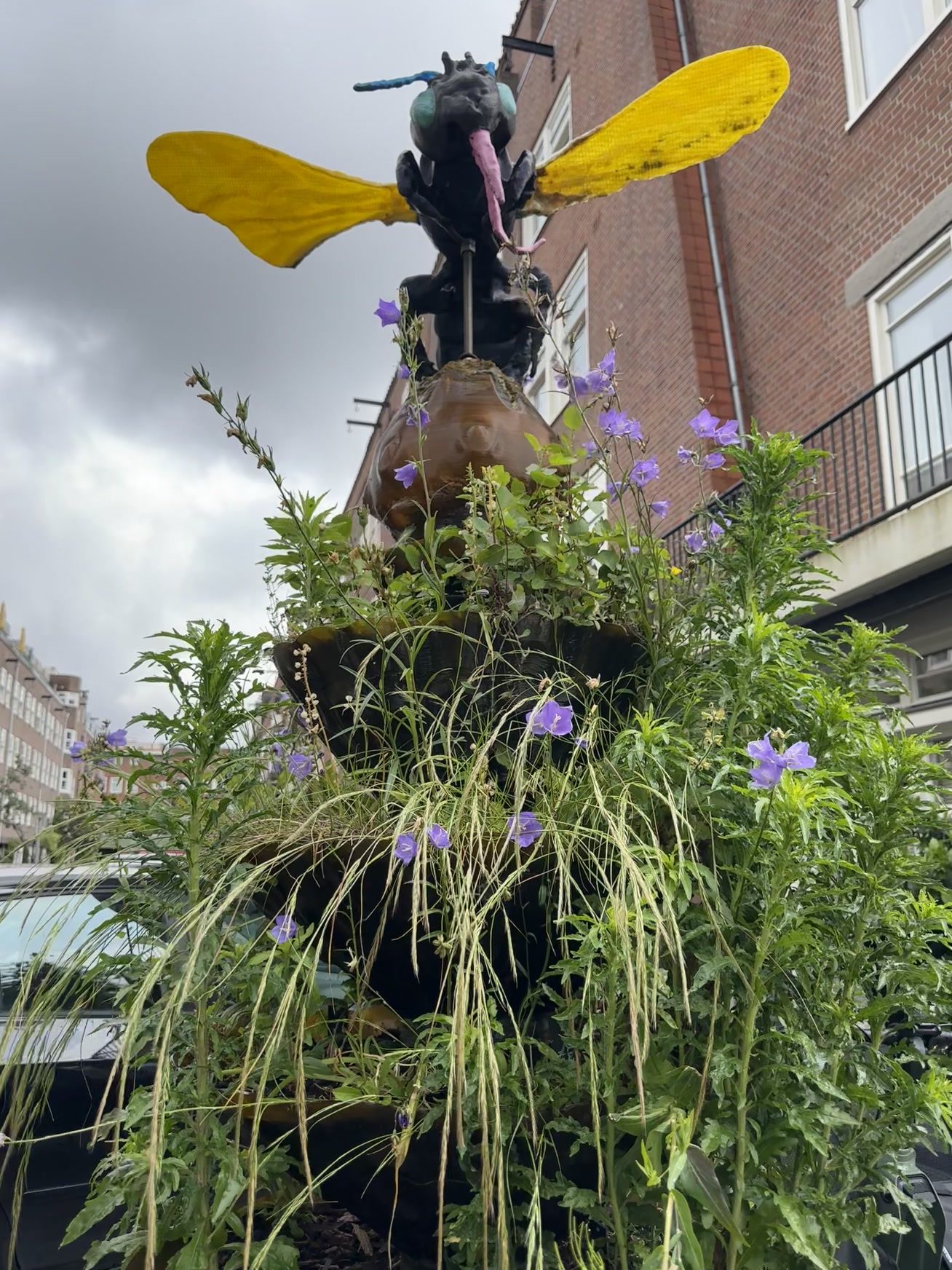
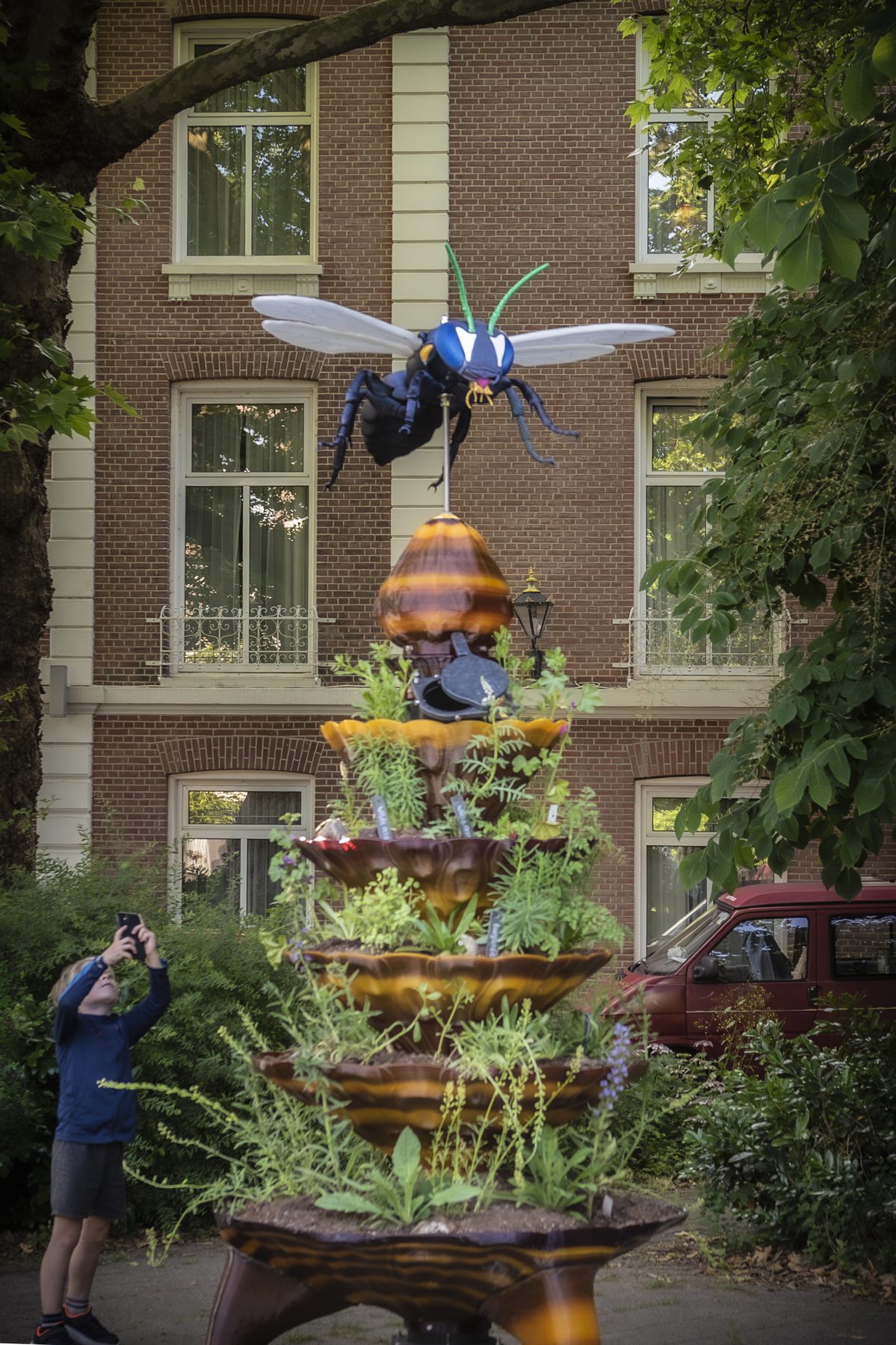
Three totems are in place. The fourth follows in 2027.
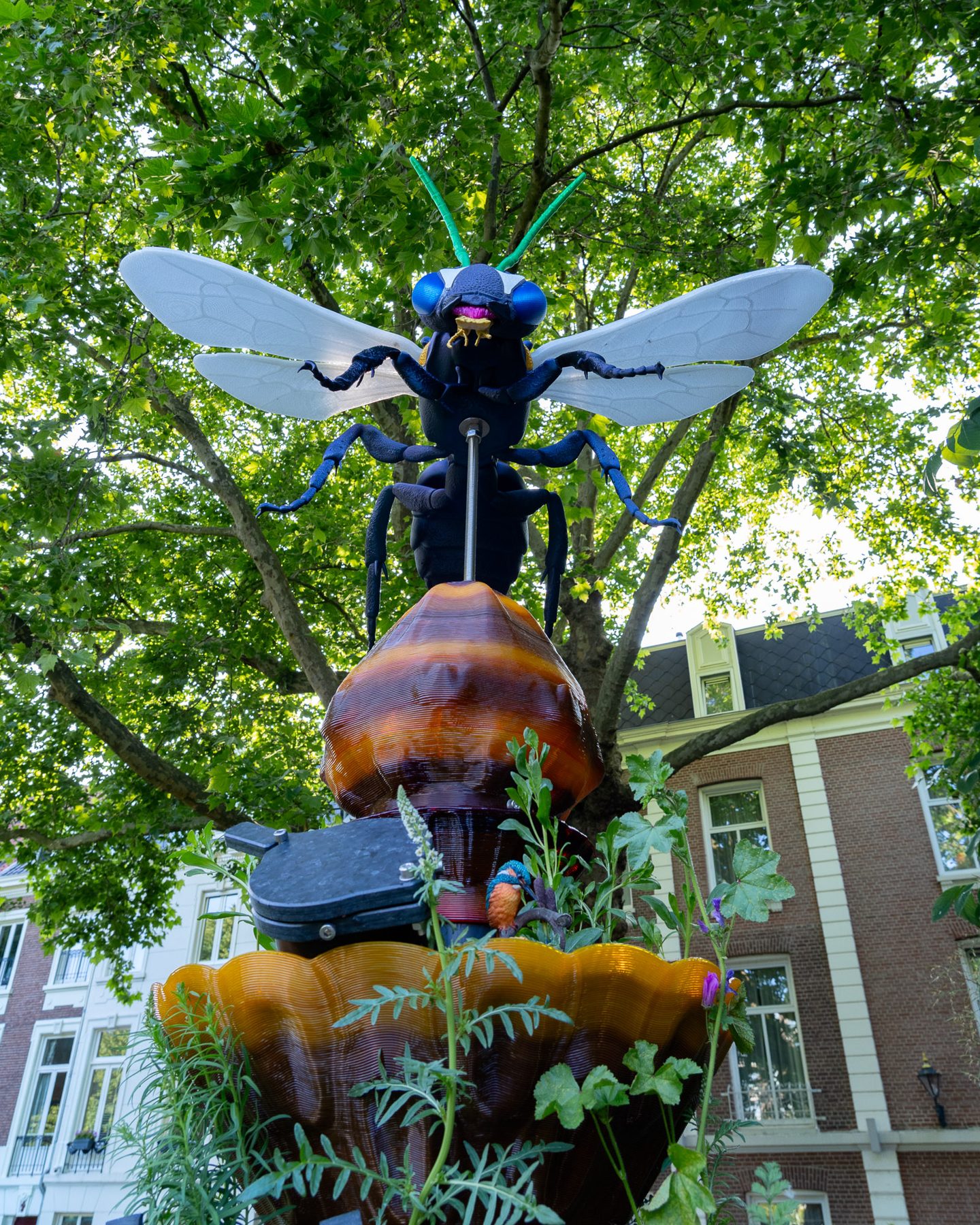
Each BeeTotem is made for one wild bee and the neighbourhood where it belongs: food, a place to nest, water and a spot to look after together.


Knowledge
What we have found out over twelve years.
Essay · Landschap
The city as a pollinator refuge
Why the number of wild bee species in Amsterdam is growing, and what the city should do with that.
Read · 3 min →
Article · De Blauwe Kamer
The city as ecological infrastructure
Not more green, but the right place. Why biodiversity is a design challenge.
Read · 2 min →
Essay
When the city becomes a refuge
From recording to deliberately building places where wild bees can live.
Read · 3 min →
Join in
What can you do yourself?
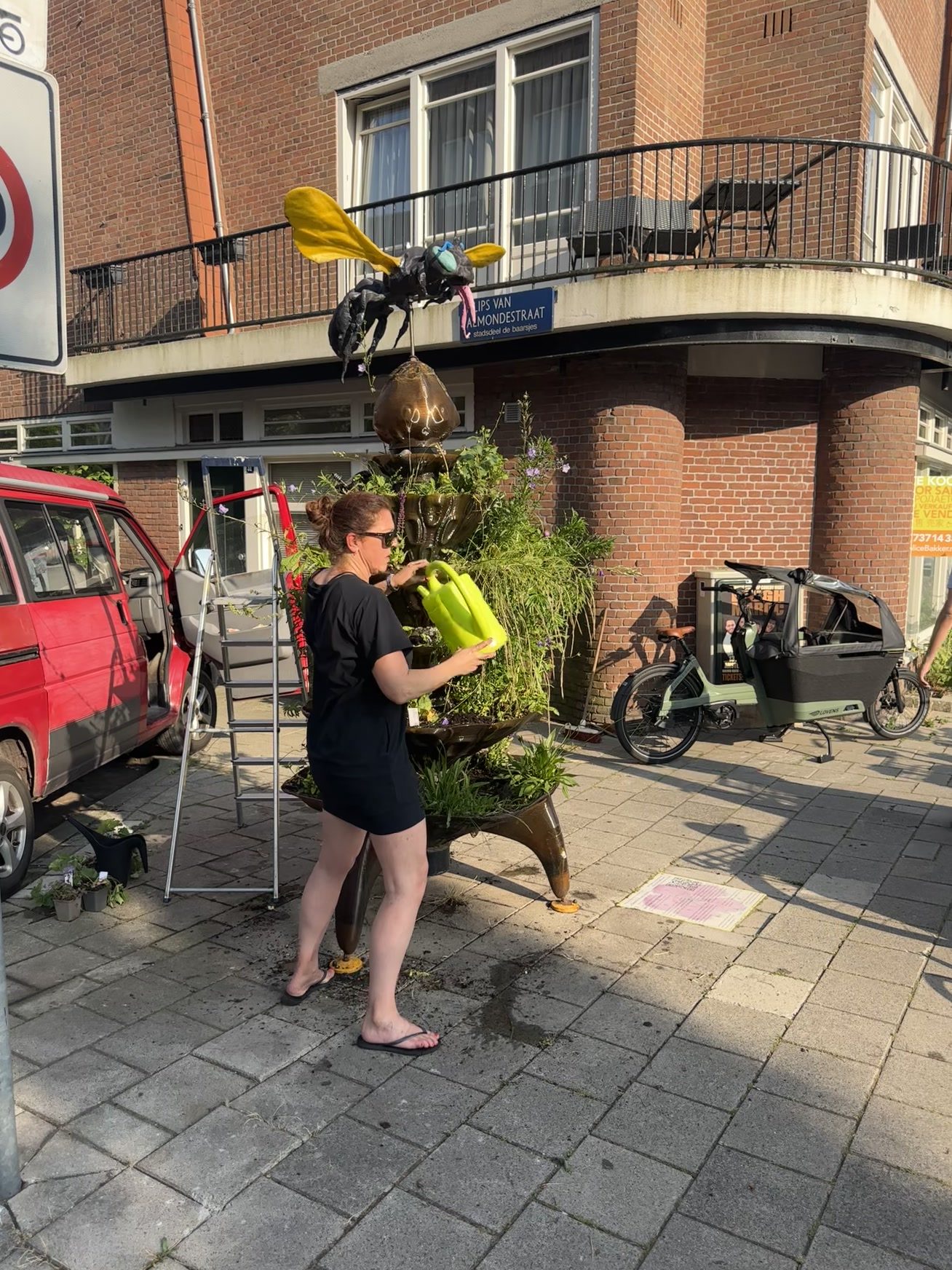
- 1Choose the bee of your neighbourhood. Every zone has its own species.
- 2Plant her flowers. On your balcony, in your garden or in a facade garden. Organic, no poison.
- 3See who comes. And share what you see with the neighbourhood.
Wild bees in Amsterdam
The city as a refuge.
Wild bees only fly 100 to 300 metres. So what's in your street counts.
Adopt a bee How it worksIn short
Why are more and more wild bees living in the city?
In half a minute: what is disappearing outside the city, what is being added in Amsterdam, and what RefuBees does about it.
100–300 m
That's how far a wild bee flies.
104
zones in Amsterdam, each with its own species.
45 → 100+
wild bee species, from around 2000 to today.
Amsterdam as a blueprint
What works in Amsterdam can work in any city.
RefuBees began in Amsterdam and shows how a city can help wild bees. The approach is meant to be taken up elsewhere: there is already a totem in Leiden and in Raitenhaslach (Bavaria), and South Holland adopted the principle of spreading.
That is why this site is in Dutch. You will find English, German and French in a shorter version.
The totems
Three totems are in place. The fourth follows in 2027.
Your neighbourhood
What lives within 300 metres of your door?
Find my bee
Join in
What can you do yourself?
1 Choose the bee of your neighbourhood · 2 Plant her flowers · 3 See who comes.
Adopt a bee