The totems / De Baarsjes
BeeTotem · De Baarsjes, Amsterdam
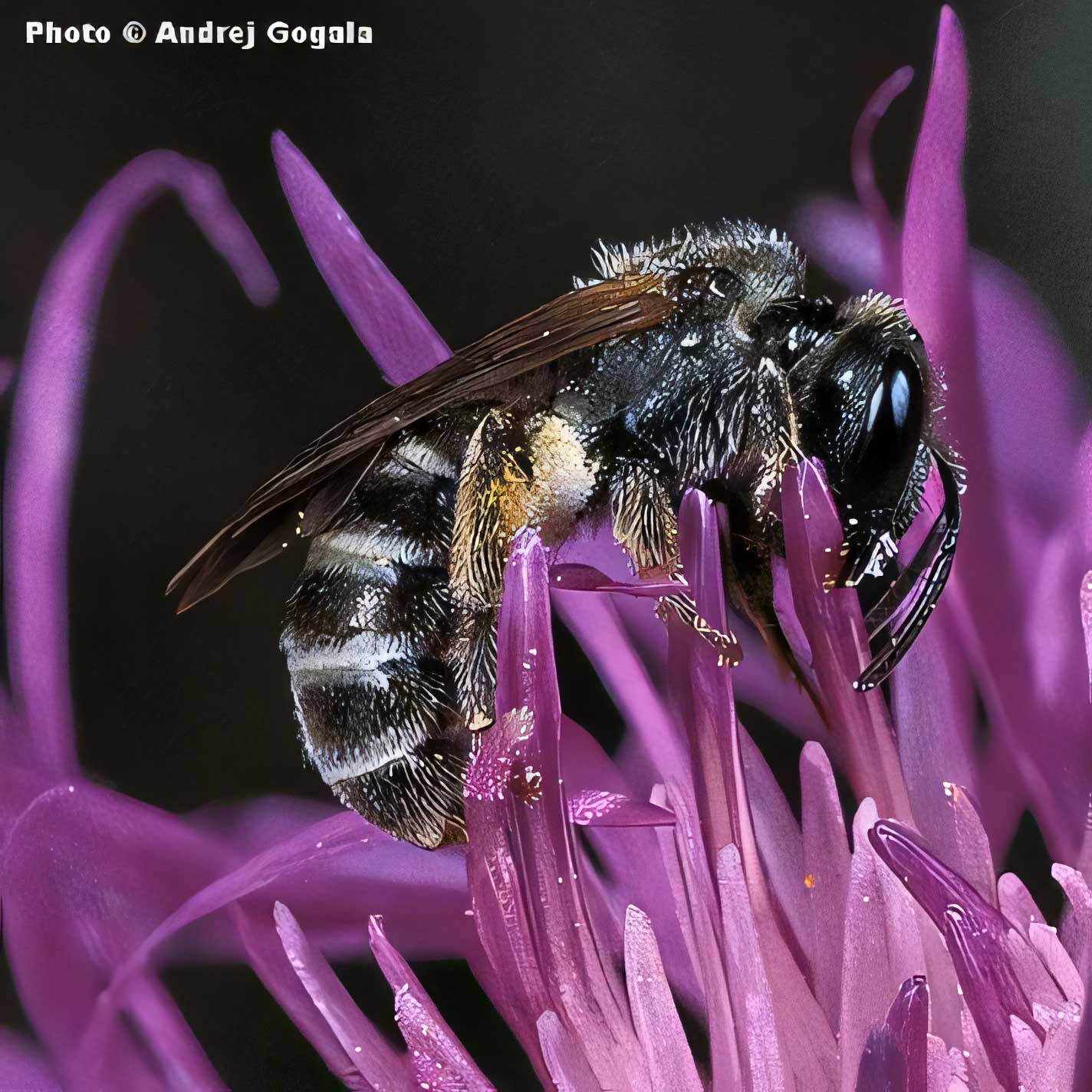
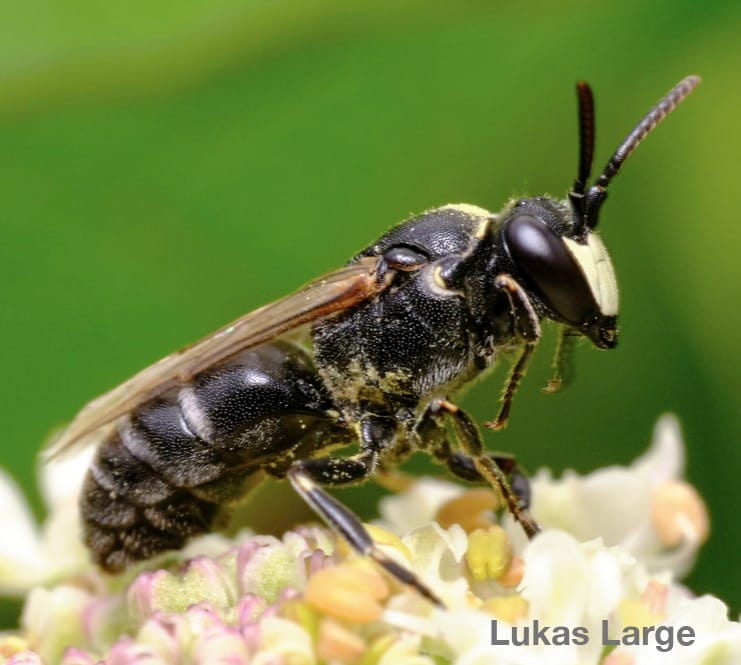
Large scissor bee
Chelostoma rapunculi
A small, shiny black bee that only visits bellflowers. In De Baarsjes she got a totem with a bee hotel above ground.

Flight time
Jun – JulNests in
Dead wood and reed stemsTotem
De BaarsjesAmsterdamHer plants
20 specieswithin 100 to 300 metresMeet her
The Large scissor bee at a glance.
Appearance
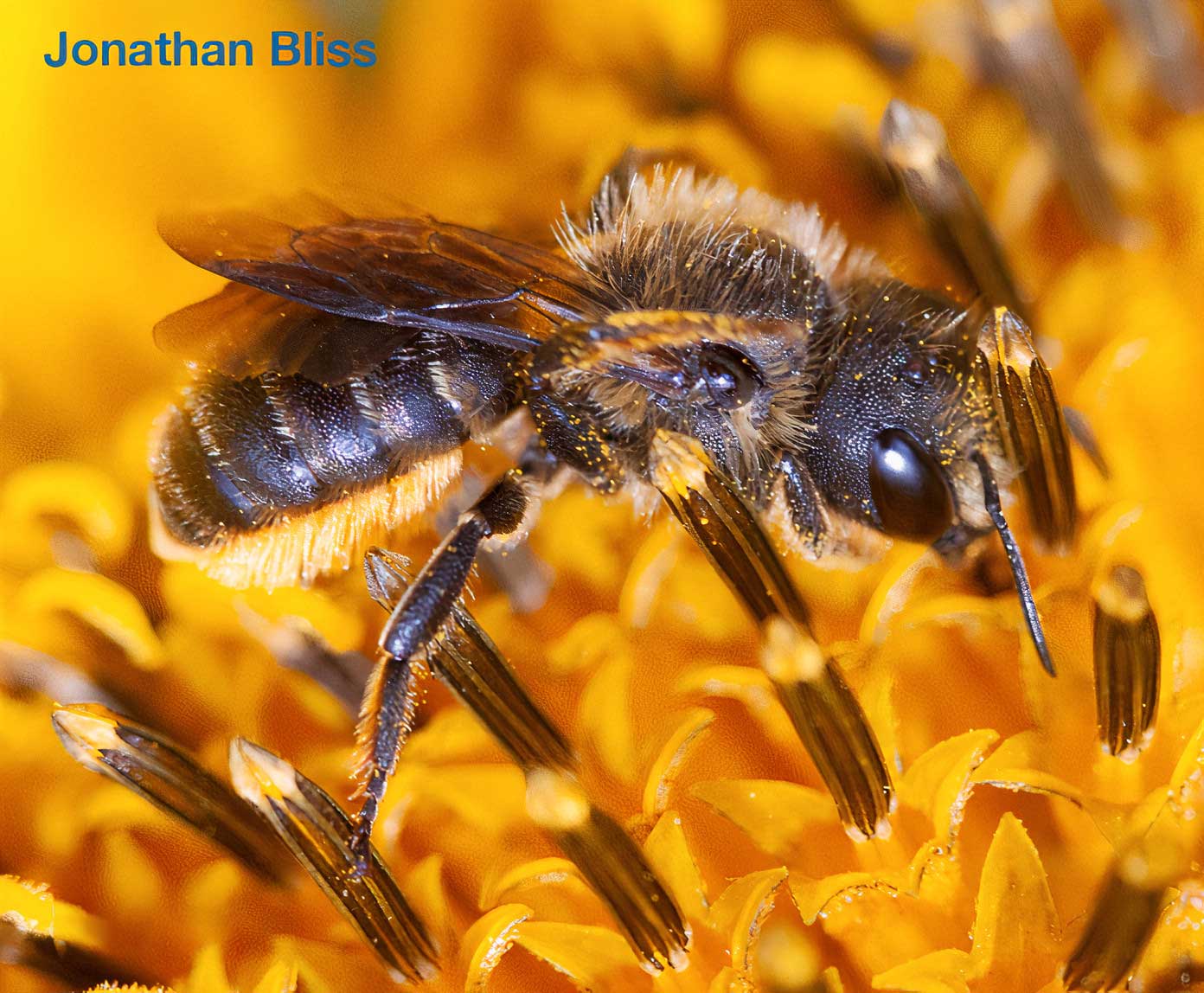
Long and slender, shiny black, with a short whitish-yellow brush under the belly for collecting pollen.
Key traits
Flight time: June to July. Nest choice: dead wood or reed stems. She looks for and pollinates only a few selected plant species.
Did you know?
On the Swedish island of Öland in the Baltic Sea, a fascinating little creature is quickly disappearing. Chelostoma rapunculi, also known as the scissor bee, is a European solitary bee. What makes it so interesting is that it is oligolectic: this fussy bee relies on just one kind of plant for its pollen and nectar. Scissor bees are bellflower specialists, which means that during their flight season in June and July they only look for food on bellflowers (Campanula).
The totem
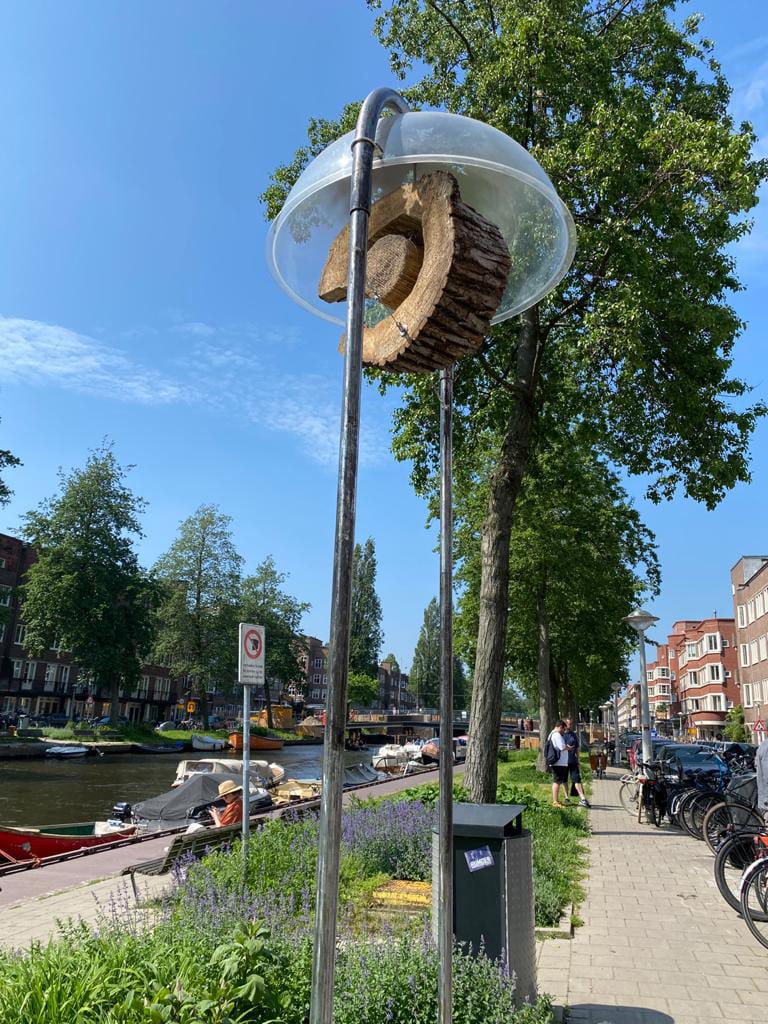
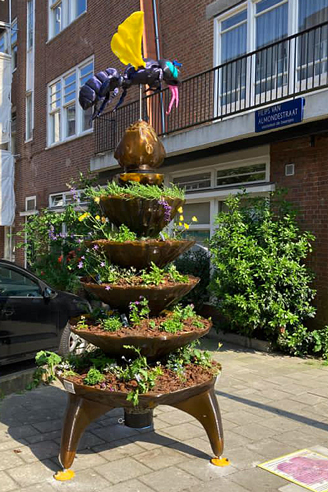
BeeTotem and BeeHotel for the Large scissor bee
The Large scissor bee is also a RefuBee and needs food and shelter. That is why the BeeTotem and BeeHotel were designed specifically for this bee. For the Large scissor bee this means a BeeHotel above ground, with holes 10 cm deep and 3.5 to 5.5 mm wide, fully waterproof and catching the morning sun in spring. Koos Biesmeijer, scientific director of Naturalis, called it the most beautiful BeeHotel he has come across so far. It is made entirely from recycled materials, so it is very sustainable too.
Where to find her
Admiralengracht, corner of Filips van Almondestraat, De Baarsjes, Amsterdam West
52.37000° N, 4.85745° O
Open in the map →What she eats
Her plants, from spring to autumn.
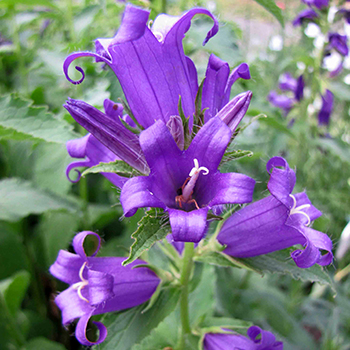
Plant one of these within 300 metres of the totem, and your balcony or garden becomes part of her habitat. The calendar shows when there is something to eat.
More about this plant
- Setting
- partial shade
- Size
- up to 120 cm
- Placement
- W / L
- Platform
- 5
- Flowering
- June-August
- Lifespan
- Perennial
- Soil
- loamy, but garden soil works too

More about this plant
- Setting
- light shade
- Size
- 30 - 70 cm
- Placement
- B / C
- Platform
- 5
- Flowering
- June - September
- Lifespan
- perennial
- Soil
- nutrient-rich soil
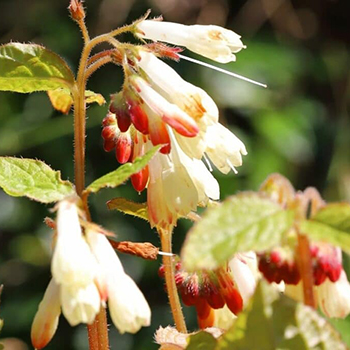
More about this plant
- Setting
- sunny to shady
- Size
- 30-50cm
- Placement
- C tot CC
- Platform
- 5
- Flowering
- March - May
- Lifespan
- perennial
- Soil
- soils rich in organic matter
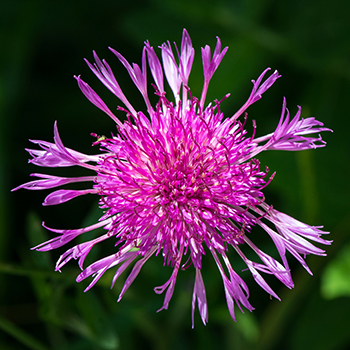
More about this plant
- Setting
- Sunny
- Size
- 30–70 cm
- Placement
- U / K
- Platform
- 4
- Flowering
- June-September
- Lifespan
- perennial
- Soil
- moist, preferably loamy, moderately rich in nutrients

More about this plant
- Setting
- sun and partial shade
- Size
- 50-90cm
- Placement
- P / N
- Platform
- 4
- Flowering
- June-July
- Lifespan
- spreads vigorously
- Soil
- moist, sandy, clayey to chalky and nutrient-rich

More about this plant
- Setting
- sun to partial shade
- Size
- 45-100 cm
- Placement
- U / K / P / N
- Platform
- 4
- Flowering
- June-August
- Lifespan
- perennial
- Soil
- moist, sandy, loamy light clay and nutrient-rich
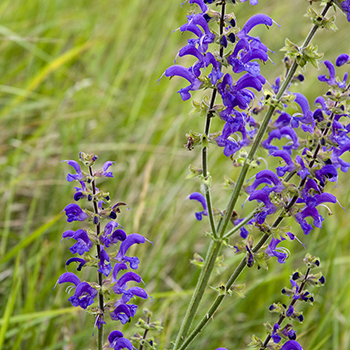
More about this plant
- Setting
- Sunny
- Size
- 30-60 cm
- Placement
- S /J
- Platform
- 3
- Flowering
- May-July
- Lifespan
- perennial
- Soil
- dry, chalky to rough ground

More about this plant
- Setting
- Sunny
- Size
- 10-40cm
- Placement
- S / J
- Platform
- 3
- Flowering
- June to September
- Lifespan
- perennial
- Soil
- moist to dry, moderately rich in nutrients, chalky, sandy
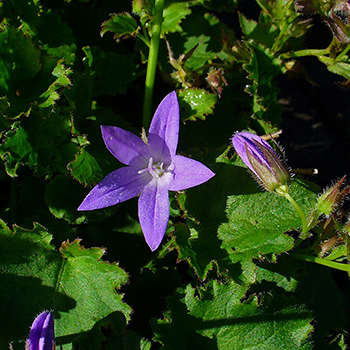
More about this plant
- Setting
- full sun to partial shade
- Size
- 25-70 cm
- Placement
- S / J
- Platform
- 3
- Flowering
- June - August
- Lifespan
- perennial
- Soil
- Field
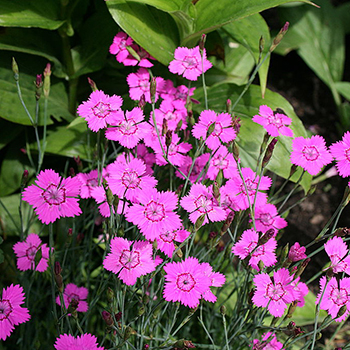
More about this plant
- Setting
- sunny
- Size
- 20-45 cm
- Placement
- H
- Platform
- 2
- Flowering
- June to autumn
- Lifespan
- short-lived perennial (Red List)
- Soil
- dry, fairly nutrient-poor sandy soil
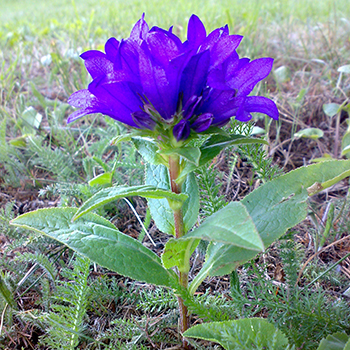
More about this plant
- Setting
- sunny to light shade
- Size
- 15-40 cm
- Placement
- Y -T
- Platform
- 4
- Flowering
- July to October
- Lifespan
- perennial
- Soil
- sandy soil, chalk slopes and stony ground
More about this plant
- Setting
- Sunny
- Size
- 5-40 cm
- Placement
- D / E
- Platform
- 1
- Flowering
- May - September
- Lifespan
- perennial
- Soil
- Clay

More about this plant
- Setting
- sunny
- Size
- 5-20 cm
- Placement
- D / E
- Platform
- 1
- Flowering
- May-June
- Lifespan
- perennial
- Soil
- nutrient-poor, sandy, loamy to sandy clay
More about this plant
- Setting
- sunny to light shade
- Size
- 30-90 cm
- Placement
- -
- Platform
- -
- Flowering
- June-July
- Lifespan
- perennial
- Soil
- moist, loamy, mountain soil and garden soil
More about this plant
- Setting
- sunny to light shade
- Size
- 30-60 cm
- Placement
- -
- Platform
- -
- Flowering
- June - August
- Lifespan
- perennial
- Soil
- moist, moderately rich in nutrients, chalky, light mineral soil
More about this plant
- Setting
- sun to shade
- Size
- 30-50 cm
- Placement
- -
- Platform
- -
- Flowering
- May - September
- Lifespan
- biennial
- Soil
- chalky sandy soil, loam
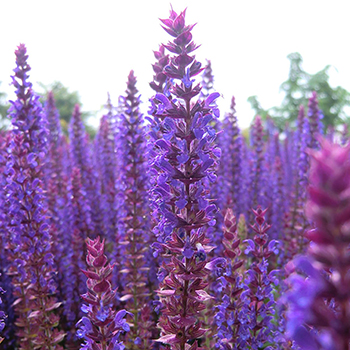
More about this plant
- Setting
- sunny
- Size
- 30-60 cm
- Placement
- -
- Platform
- -
- Flowering
- June - July
- Lifespan
- perennial
- Soil
- mainly on chalky soil
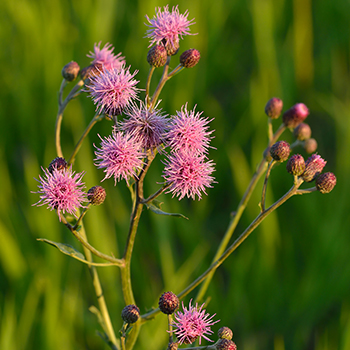
More about this plant
- Setting
- Sunny
- Size
- 60-120 cm
- Placement
- -
- Platform
- -
- Flowering
- June-August
- Lifespan
- Perennial
- Soil
- all kinds, moist to dry
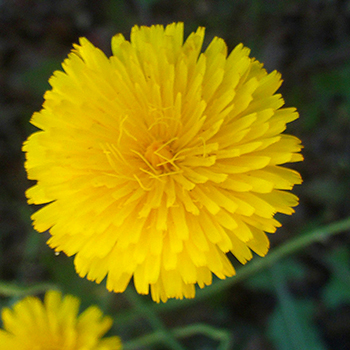
More about this plant
- Setting
- Sunny
- Size
- 30-90 cm
- Placement
- -
- Platform
- -
- Flowering
- June-November
- Lifespan
- annual to biennial
- Soil
- nutrient-rich, dug-over soil
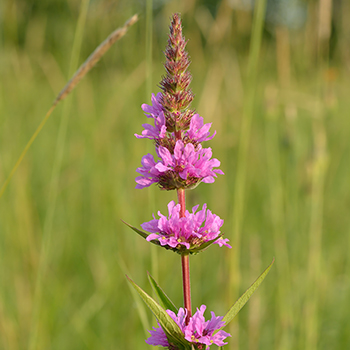
More about this plant
- Setting
- sunny to partial shade
- Size
- 60-120 cm
- Placement
- -
- Platform
- -
- Flowering
- June-September
- Lifespan
- perennial
- Soil
- wet, nutrient-rich, slightly acidic to chalky
Extra: not native, but much loved

More about this plant
- Setting
- sun to light shade
- Size
- 15-40 cm
- Placement
- -
- Platform
- -
- Flowering
- June - September
- Lifespan
- perennial
- Soil
- moist, sandy and clayey to poor and moderately rich in nutrients
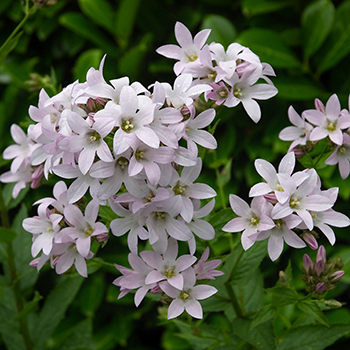
More about this plant
- Setting
- sunny to light shade
- Size
- 50-120 cm
- Placement
- -
- Platform
- -
- Flowering
- July - September
- Lifespan
- perennial
- Soil
- moderately moist but well-drained, average soil
Buying plants
Organic, and native if you can.
We share Cruydt-Hoeck’s dream of creating more biodiversity with flower-rich vegetation for plants, animals and people. Cruydt-Hoeck is an organic grower and supplier of native wild plants and wild plant seeds. You can order plants and seeds online and have them delivered to your door.
Buy before or at the start of the flowering season. Sowing works too.
Karmagotchi
How the totem is doing.
The Karmagotchi is based on the idea of the Tamagotchi. It is a tool that lets hosts keep track, together, of how the plants and worms in the BeeTotem are doing. A script linked to the local weather station runs all the time, collects temperature and rainfall data and sets the level from 100 to 0%. Hosts have access to this interface. After adding water or kitchen scraps, they can let all the other hosts know by simply tapping the water or food icon.
Water72%
Food for the worms38%
Sample values. Hosts see the real levels here and report with one tap that they have given water or kitchen scraps.
Join in
Help look after the Large scissor bee.
Host
Become a host of the totem
Hosts feed the worms kitchen scraps, keep the plants watered and tell the neighbours about it. Fill in the covenant and email it to info@refubees.org.
Read the covenantAdopt
Plant her flowers at home
Find out which bee belongs to your neighbourhood and which flowers she needs. One plant on your balcony already helps.
Adopt a beeSpotting
Seen her? Take a photo
The paving stone next to the totem has a QR code that leads to this page. Seen the bee? Take a photo and send it in: that way we can tell whether the totem works.
Send a photoOther totems