

Rampion Scissor Bee
Chelostoma rapunculi
Appearance
Elongated, shiny black, with a short, white-yellow abdominal spathe for collecting pollen.
Special traits
Flight time: June to July. Nesting site: Dead wood or reed stems. It forages and pollinates only a few selected species of plants.
Interesting facts
On the Swedish island of Öland in the Baltic Sea, an impressive species is on the verge of extinction. Chelostoma rapunculi, the large bellflower scissor bee, is a European solitary bee species. What makes it so interesting is the fact that it is oligolectic: this picky bee is dependent on only one particular plant species for its pollen and nectar. Scissor bees are specialists for bluebells, which means that they only forage on bluebell species (Campanula) during their flight period in June and July.
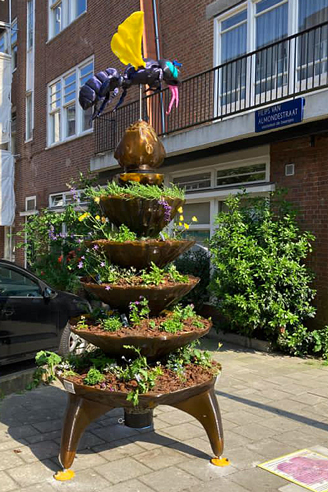
Physical location of the BeeTotem
Admiralengracht corner Filips van Almondestraat, De Baarsjes, Amsterdam West, NL.
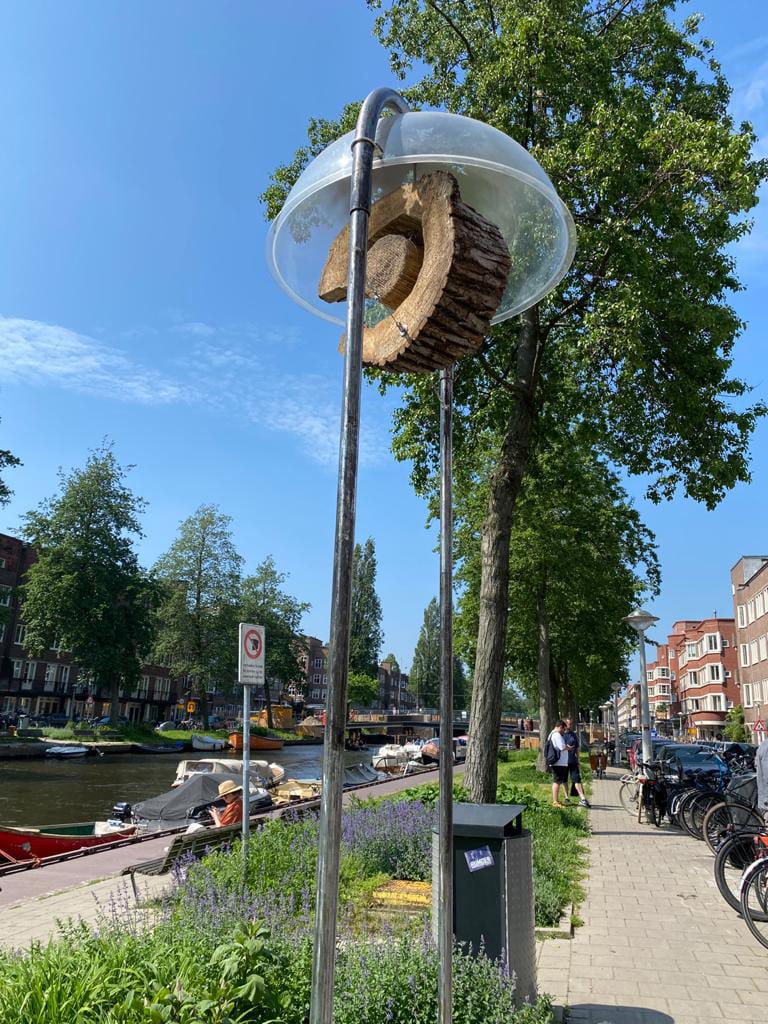
Beetotem and Beehotel
BeeTotem and BeeHotel for the Rampion Scissor Bee
The Rampion Scissor Bee is also a RefuBee and needs food and protection. BeeTotem and BeeHotel have therefore been specially developed for this bee. For the Rampion Scissor Bee, this means an above-ground BeeHotel with 10 cm deep holes with a diameter of 3.5 to 5.5 mm, which remains completely dry and utilises the morning sun in spring. Koos Biesmeijer, scientific director of Naturalis (Dutch Nature Museum), declared this BeeHotel to be the most beautiful BeeHotel he has ever seen. Because it is made entirely from recycled materials, it is also very sustainable.
It is of the utmost importance that the host families and their neighbours grow the specific plants that this bee species feeds on in their gardens and on their balconies. In this way, a clan of the Great Bellflower Scissor Bee is formed in the neighbourhood and the residents help to prevent the extinction of this species.
Plants for The Rampion Scissor Bee
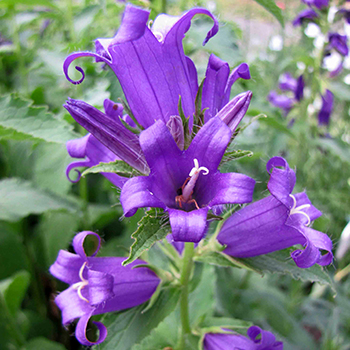
Nettle-leaved Bellflower
| Latin | Campanula trachelium |
| Environment | partial shade |
| Size | up to 120 cm |
| Placement | W / L |
| Platform | 5 |
| Bloom | June-August |
| Lifespan | Perennial |
| Soil | loamy but also garden soil |

Musk Mallow
| Latin | Malva moschata |
| Environment | light shade |
| Size | 30 - 70 cm |
| Placement | B / C |
| Platform | 5 |
| Bloom | June - September |
| Lifespan | Perennial |
| Soil | nutrient-rich soil |
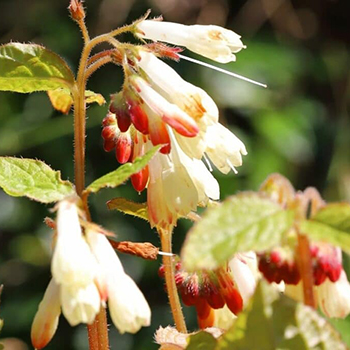
Creeping Comfrey
| Latin | Symphytum grandiflorum |
| Environment | sunny to shaded |
| Size | 30-50cm |
| Placement | C tot CC |
| Platform | 5 |
| Bloom | March - May |
| Lifespan | Perennial |
| Soil | organically rich soils |
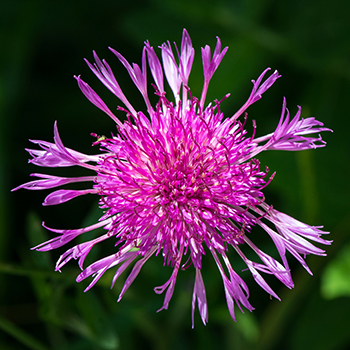
Brown Knapweed
| Latin | Centaurea jacea |
| Environment | Sunny |
| Size | 30–70 cm |
| Placement | U / K |
| Platform | 4 |
| Bloom | June-September |
| Lifespan | Perennial |
| Soil | moist, preferably loamy, moderately fertile |

Meadow Cranesbill
| Latin | Geranium pratense/pyrenaicum |
| Environment | sun and partial shade |
| Size | 50-90cm |
| Placement | P / N |
| Platform | 4 |
| Bloom | June-July |
| Lifespan | Spreading perennial |
| Soil | moist, sandy, clayey to calcareous and nutrient-rich |

Creeping Bellflower
| Latin | Campanula rapunculoides |
| Environment | sun to partial shade |
| Size | 45-100 cm |
| Placement | U / K / P / N |
| Platform | 4 |
| Bloom | June-August |
| Lifespan | Perennial |
| Soil | moist, sandy, loamy light clay and nutrient-rich |
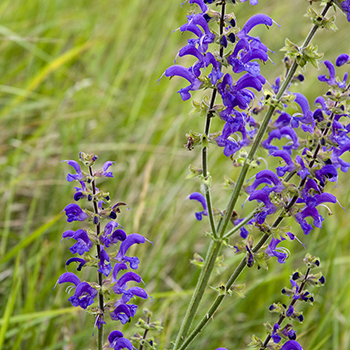
Meadow Clary
| Latin | Salvia pratensis |
| Environment | Sunny |
| Size | 30-60 cm |
| Placement | S /J |
| Platform | 3 |
| Bloom | May-July |
| Lifespan | Perennial |
| Soil | dry, calcareous in rough places |

Bird's-foot Trefoil
| Latin | Lotus corniculatus |
| Environment | Sunny |
| Size | 10-40cm |
| Placement | S / J |
| Platform | 3 |
| Bloom | June to September |
| Lifespan | Perennial |
| Soil | moisture-retaining to dry, moderately fertile, calcareous, sandy |
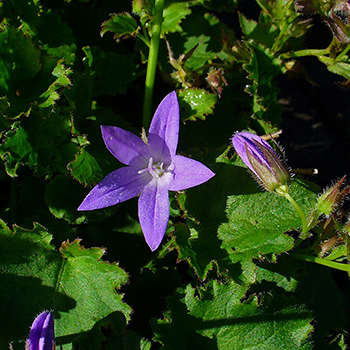
Serbian Bellflower
| Latin | Campanula poscharskyana |
| Environment | full sun to partial shade |
| Size | 25-70 cm |
| Placement | S / J |
| Platform | 3 |
| Bloom | June - August |
| Lifespan | Perennial |
| Soil | Arable |
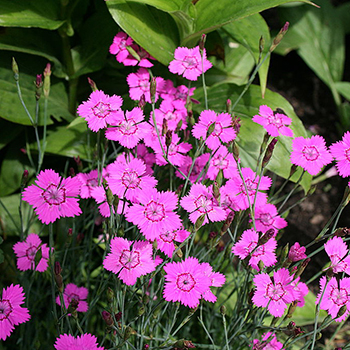
Maiden Pink
| Latin | Dianthus deltoides |
| Environment | Sunny |
| Size | 20-45 cm |
| Placement | H |
| Platform | 2 |
| Bloom | June to autumn |
| Lifespan | Short-lived perennial (Red List) |
| Soil | dry, moderately nutrient-poor sandy soil |
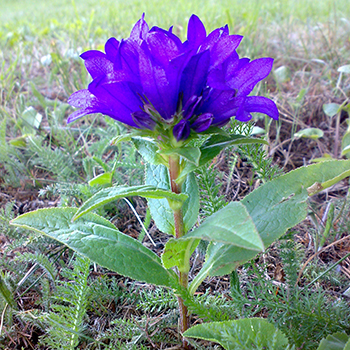
Harebell
| Latin | Campanula rotundifolia |
| Environment | sunny to lightly shaded |
| Size | 15-40 cm |
| Placement | Y -T |
| Platform | 4 |
| Bloom | July to October |
| Lifespan | Perennial |
| Soil | sandy soil, chalk slopes and stony |
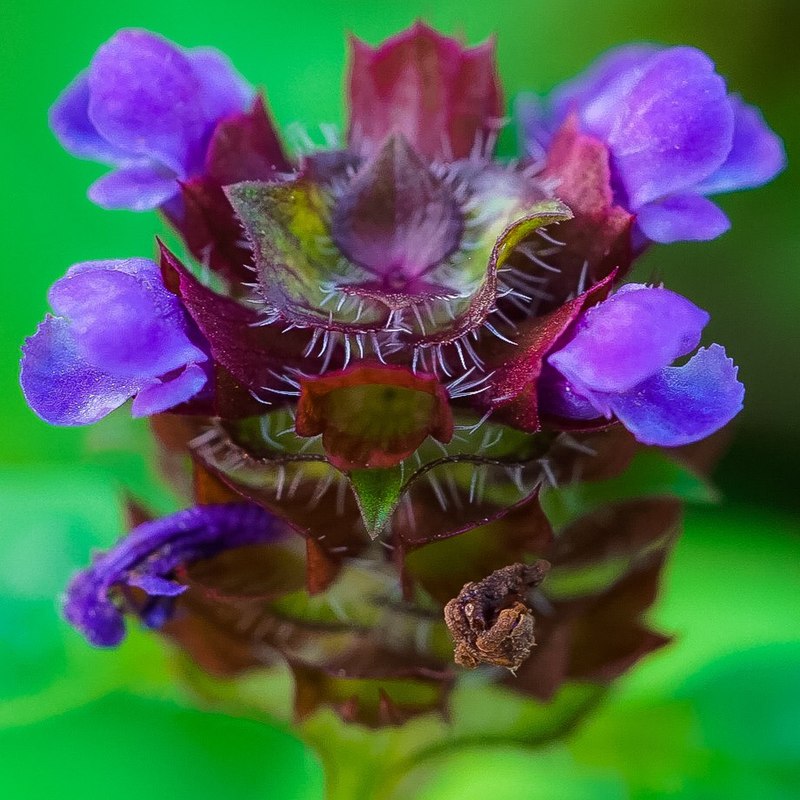
Common Self-heal
| Latin | Prunella vulgaris |
| Environment | Sunny |
| Size | 5-40 cm |
| Placement | D / E |
| Platform | 1 |
| Bloom | May - September |
| Lifespan | Perennial |
| Soil | Clay |

Mouse-ear Hawkweed
| Latin | Hieriacum pilosella |
| Environment | Sunny |
| Size | 5-20 cm |
| Placement | D / E |
| Platform | 1 |
| Bloom | May-June |
| Lifespan | Perennial |
| Soil | nutrient-poor, sandy, loamy to silty |
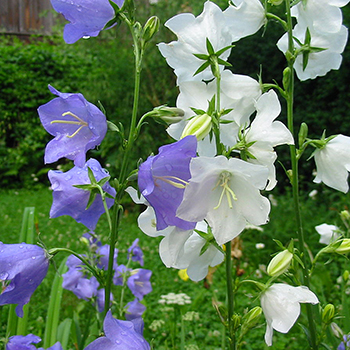
Peach-leaved Bellflower
| Latin | Campanula persicifolia |
| Environment | sunny to lightly shaded |
| Size | 30-90 cm |
| Placement | - |
| Platform | - |
| Bloom | June-July |
| Lifespan | Perennial |
| Soil | moist, loamy, mountain soil and garden soil |
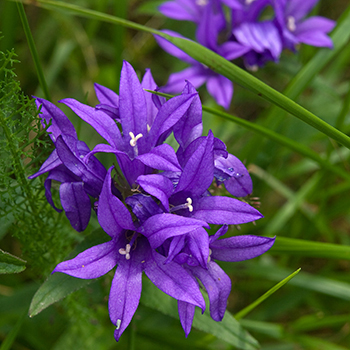
Clustered Bellflower
| Latin | Campanula glomerata |
| Environment | sunny to lightly shaded |
| Size | 30-60 cm |
| Placement | - |
| Platform | - |
| Bloom | June - August |
| Lifespan | Perennial |
| Soil | moist, moderately fertile, calcareous slightly mineral |
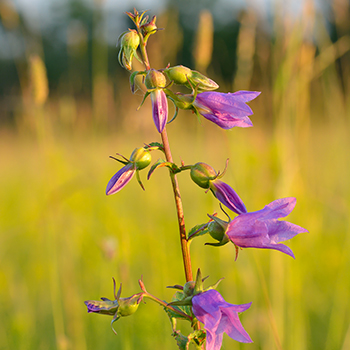
Rampion Bellflower
| Latin | Campanula rapunculus |
| Environment | sun to shade |
| Size | 30-50 cm |
| Placement | - |
| Platform | - |
| Bloom | May - September |
| Lifespan | Biennial |
| Soil | calcareous sandy soil, loam |
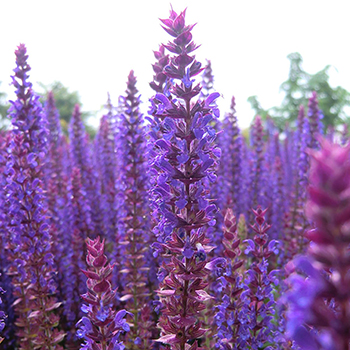
Woodland Sage
| Latin | Salvia nemorosa |
| Environment | Sunny |
| Size | 30-60 cm |
| Placement | - |
| Platform | - |
| Bloom | June - July |
| Lifespan | Perennial |
| Soil | mainly on calcareous soil |
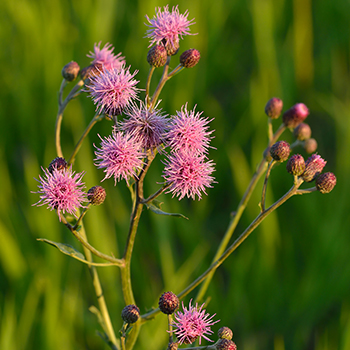
Creeping Thistle
| Latin | Cirsium arvense |
| Environment | Sunny |
| Size | 60-120 cm |
| Placement | - |
| Platform | - |
| Bloom | June-August |
| Lifespan | Perennial |
| Soil | various, moist to dry |
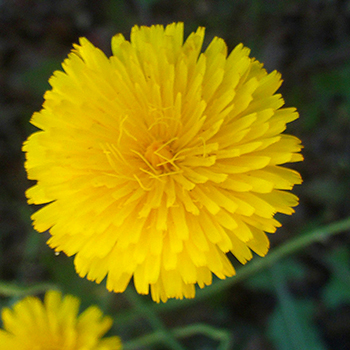
Smooth Hawk's-beard
| Latin | Crepis capillaris |
| Environment | Sunny |
| Size | 30-90 cm |
| Placement | - |
| Platform | - |
| Bloom | June-November |
| Lifespan | annual to biennial |
| Soil | nutrient-rich cultivated soil |
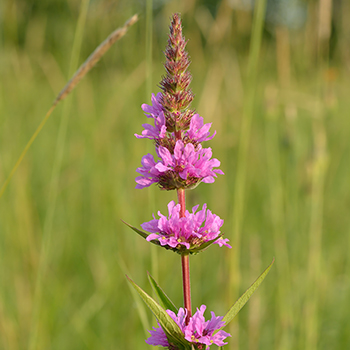
Purple Loosestrife
| Latin | Lythrum salicaria |
| Environment | Sunny to partial shade |
| Size | 60-120 cm |
| Placement | - |
| Platform | - |
| Bloom | June-September |
| Lifespan | Perennial |
| Soil | wet, nutrient-rich to mildly acidic and calcareous |
Extra non-native

Carpathian Bellflower
| Latin | Campanula campartica |
| Environment | sun to light shade |
| Size | 15-40 cm |
| Placement | - |
| Platform | - |
| Bloom | June - September |
| Lifespan | Perennial |
| Soil | moisture-retaining, sandy and clayey to poor and moderately fertile |
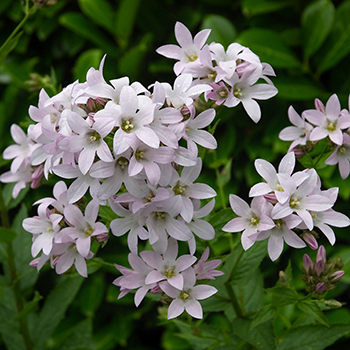
Milky bellflower
| Latin | Campanula lactiflora |
| Environment | sunny to lightly shaded |
| Size | 50-120 cm |
| Placement | - |
| Platform | - |
| Bloom | July - September |
| Lifespan | Perennial |
| Soil | moderately moist but well-draining, average soil |
KARMAGOTCHI
The principles behind the Karmagotchi are derived from Tamagotchi, a tool that allows hosts to easily keep track of the current condition of plants and worms in the BeeTotem. A continuous script linked to the local weather station retrieves data on temperature and precipitation and regulates the pace from 100 to 0%.
Hosts have access to this interface and after adding water or kitchen scrapings they can update all other hosts by simply clicking on the water or feed icon.
STATUS
Information
On this BeeTotem
QR code
This QR code is printed on the information pavement tile at this BeeTotem and on the information board at the corresponding BeeHotel. People who scan this code with their phone will be taken to this webpage for more information. At the same time, people are encouraged to spot bees, photograph them and upload these photos to this page. Everyone who participates in this supports a direct evaluation process.

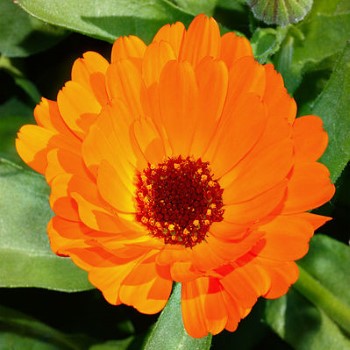
Plants for sale
It is very important that the plants are of biological quality and if possible with a native strain.
We share the dream with Cruydt-Hoeck to create more biodiversity with flowery vegetation for plants, animals and humans. Cruydt-Hoeck is an organic grower and supplier of native wild plants and wild plant seeds. You can order plants and seeds, and it will be delivered to your doorstep by mail.

Plant layout
For each plant information you can see where it can be placed in the Bee Totem. Download the overview here
Address:
Amsterdam
Email us :
info@refubees.org
Call ons:
+31 6 553 563 43
Bee social
Information
Privacy