Revealing the intersection of art and ecology in the conservation of wild pollinators
A survey of art projects involving bees reveals a rich palette of creativity and areas of focus. A simple search for “art” and “bees” yields countless examples of art with a honey bee theme. This abundance contrasts sharply with the relatively few artists who engage with the intricacies of wild bees – perhaps because of the intimidating diversity of wild bee species, the limited public interest, or the complex challenge of then integrating such subjects into urban conservation efforts. Before briefly turning to the search for potential projects of varying degrees of impact, I want to highlight one important initiative that stands out as a true ecological intervention.
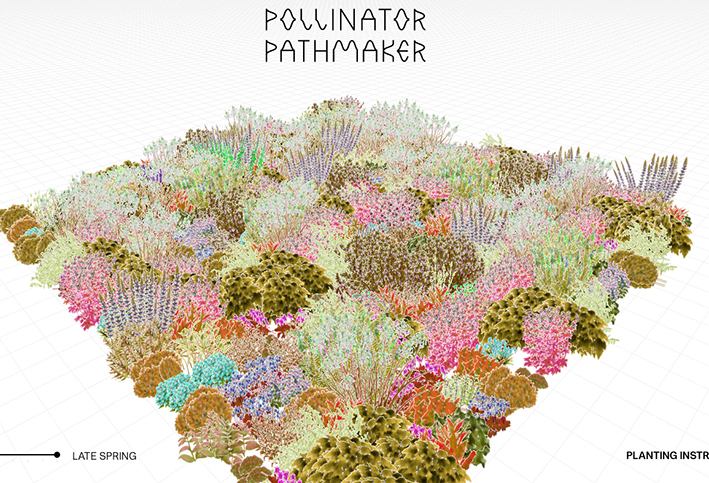
Daisy Ginsberg’s “Pollinator Pathmaker”: Patchwork blueprint for the next step
The British-South African artist Daisy Ginsberg combines art and ecology in her extensive project to create pollinator-friendly spaces in urban landscapes. Although it is primarily an artistic installation, it is deeply rooted in research on pollinators and aims for tangible changes in urban ecology. The “Pollinator Pathmaker” not only inspires with digital interpretations of pollinator-friendly environments, but also offers a practical guide for designing individual gardens. Using an algorithm, the project suggests a tailor-made selection of European flowers, matched to specific locations and designed to support a wide range of pollinator species. Users enter data such as location, soil quality and shade/sun, taking their personal preferences into account. In return they receive comprehensive planting guidance, including the selection of plant species, layout plans and advice on weed control. This interactive platform shows a virtual view of the new flower arrangements as they would look in different seasons, bringing the planned garden to life with remarkable clarity. https://pollinator.art
The illusion of “Pollinating Cities” and “Bee Urban”
During a research exercise led by artificial intelligence, I came across the Pollinating Cities project, which promises to combine art, science and the greening of urban spaces to improve pollinator populations. Alexandra Dementieva, a name among the participants, caught my attention, struck a personal chord and gave the project an air of familiarity and trust.
In the course of the research, however, it emerged that both “Pollinating Cities” and a similar “Bee Urban” project were fake – an intricate mix of imagination and digital ingenuity created by artificial intelligence. This realisation counsels caution when it comes to relying on AI to verify information, especially when it spins stories that blend with real interests and connections. The unmasking of fictional projects, despite their convincing presentation and the mention of real names, underlined the importance of scepticism and thorough vetting in the digital age.
Scepticism towards BeeBricks and the search for effective solutions
A more design-led and entrepreneurial approach was taken by the BeeBricks initiative from Brighton, England. This concept has found its way into local planning regulations, which require its installation in new buildings. Dave Goulson, professor of biology at the University of Sussex, was sceptical, however: “We are kidding ourselves if we think that every house with one of these bricks will make a difference to biodiversity. Much more substantial measures are needed, and these bricks can easily be used as ‘greenwash’ by developers.
Beyond art: bringing about real ecological change
The journey from conceptual art to effective environmental intervention highlights the transformative potential of art. The most influential artistic initiatives are not content with challenging perceptions or stimulating discussion, but playfully create change and design for future conservation efforts. This concrete transition from concept to implementation is the true measure of success.
It takes patience to develop a process that effectively combines art and ecological activism into achievable interventions that bring about lasting change in practice and that create replicable precedents, or blueprints, for future efforts.
Keep reading
From reading to planting.
Find the bee that belongs to your neighbourhood, and plant her flowers.