Knowledge / Research in practice
Research in practice
Practical research: Designing urban transition solutions for RefuBees
In 2014 a scientific study revealed the surprising finding that wild bees not only survive in the city but even thrive compared with rural areas. Remarkably, as the Hallmann report showed a few years later, this negative situation extends even to nature reserves.
The beginning of BeeTotem case studies
development and methods
We therefore began exploring methods to create temporary urban infrastructures that cover the broad and diverse spectrum of all ‘RefuBee’ species through individual case studies.
From materials to social cohesion
exploring BeeTotem implementations
By 2020 we had carried out individual case studies on the implementation of BeeTotem projects in various urban areas. These studies focused mainly on the use of materials, the impact on social cohesion, and the educational and awareness-raising effects. These results are documented in detail in reports and multimedia presentations.
The road to the TUDelft campus
extensive ecological assessments
At the moment we are carrying out more extensive case studies on the TUDelft campus, right on the doorstep of our Urban Ecology Lab. This includes extensive ecological assessments of both a qualitative and a quantitative nature, starting with an initial benchmark baseline measurement, which currently covers the last six years of observation.
Widening the spectrum
looking ahead to future case studies
Our immediate aim is to broaden our scope by carrying out more extensive and meaningful case studies in different ecological and cultural urban settings, with the current focus on Amsterdam and Munich.
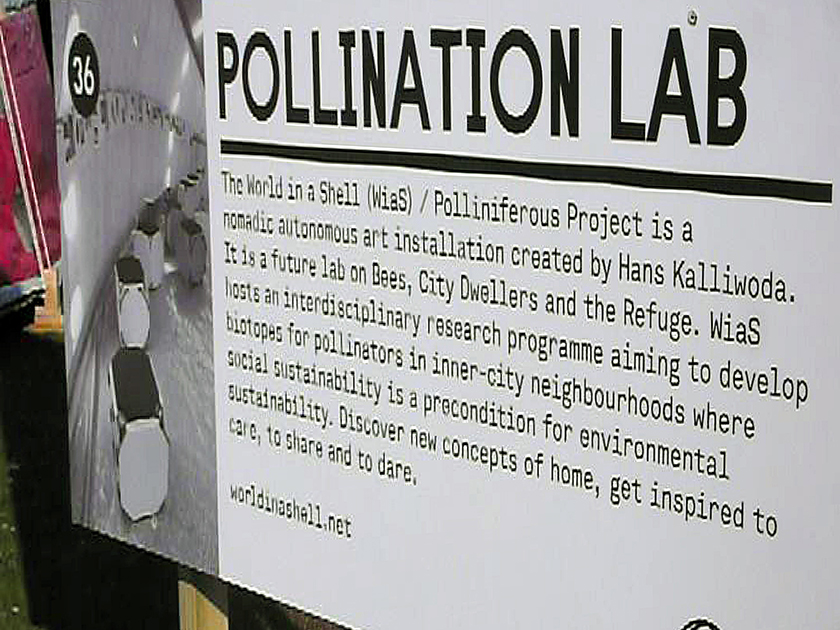
Photo: Future Pollination Lab, 2016 at the ‘Europe by People’ event marking the Dutch Presidency of the Council of the EU / Ernst van Deursen


From reading to planting.
Find the bee that belongs to your neighbourhood, and plant her flowers.